Family boat rules in Amsterdam: Safe fun for all ages
Explore Amsterdam’s family-friendly boating rules for a safe and fun canal trip with kids. Enjoy an unforgettable outdoor adventure!
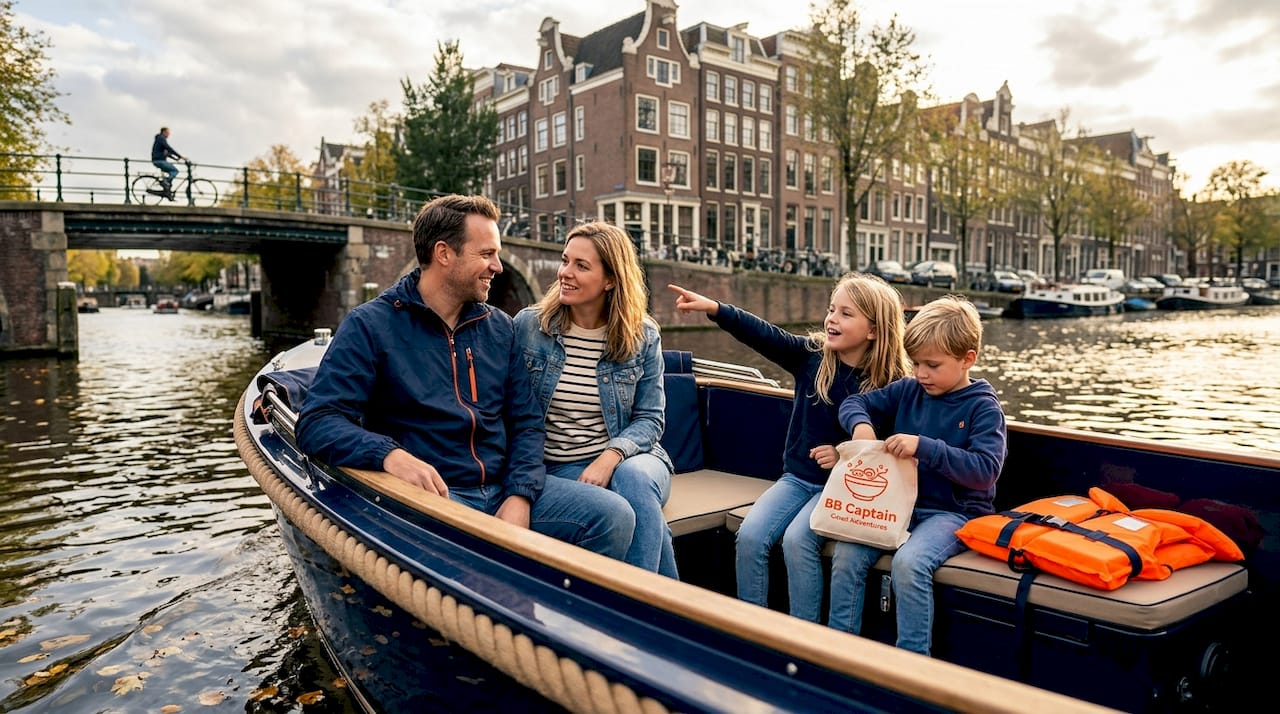
Family boat rules in Amsterdam: Safe fun for all ages
Planning a canal trip in Amsterdam with kids is one of those experiences that sounds magical until you realize you have no idea what the rules are. The good news? Amsterdam’s boating regulations are genuinely built with families in mind. Speed limits keep the water calm, passenger rules prevent crowding, and practical safety guidelines give parents real peace of mind. Whether you’re a first-time visitor or a local planning your next outdoor adventure, understanding these rules turns a potentially stressful day into a relaxed, joyful outing that everyone will want to repeat.
Table of Contents
Essential safety rules every family must know
Passenger limits and right-of-way: Making room for safety
How to make your boat trip engaging and safe for kids
Comparison summary: Amsterdam rules vs. everyday family boating
A fresh perspective: Why Amsterdam’s rules make family boating hassle-free
Get started: Explore family-friendly boating in Amsterdam
Frequently asked questions
Key Takeaways
Point | Details |
|---|---|
Follow the speed limit | Keeping below 6 km/h ensures safety for all guests, especially children. |
Respect passenger limits | Never exceed 12 passengers plus the skipper for a comfortable and safe trip. |
Put prevention first | Life jackets and attentive skippers are key to worry-free family boating. |
Yield to commercial boats | Pleasure boats must stay right and let commercial vessels pass to avoid accidents. |
Combine rules with fun | Use these regulations as guidelines to make your family’s Amsterdam adventure smooth and memorable. |
Essential safety rules every family must know
After setting the stage, let’s focus on the rules that matter most for families. Amsterdam’s canals may look laid-back, but there’s a structured set of rules underneath the surface that keeps everyone safe, especially young passengers who can’t always look out for themselves.
The first thing every family skipper needs to know is the speed limit. According to boating in Amsterdam, the canal speed limit is 6 km/h for all pleasure craft. That might sound slow, but it’s intentional. At 6 km/h, the wake your boat creates is minimal, which means less rocking, less chance of small children losing their balance, and far fewer collision risks in the busy waterways near the city center. Think of it as the “school zone” speed of Amsterdam’s water network.
Here are the core safety rules every family needs to follow before pushing off:
Speed limit: Stay at or below 6 km/h at all times in designated canal zones.
Life jackets: Strongly recommended for all children onboard. Even in calm, shallow water, accidents happen fast.
No alcohol for the skipper: The person operating the boat must remain sober throughout the entire trip. This is non-negotiable and enforceable.
Supervision: At least one adult should be designated as the “lookout” for younger children at all times, separate from the person steering.
Boarding and exiting safely: Always dock fully before children step on or off. Never allow kids to move between vessels while floating.
“Safety on Amsterdam’s canals isn’t about limiting your experience. It’s about making sure every family gets home with great memories instead of a scary story.”
Pro Tip: Before you leave the dock, assign a specific adult as the “child lookout.” This person’s only job is to watch the kids, not navigate. It sounds simple, but when you’re focused on steering through a busy canal, it’s easy to lose track of a curious toddler who wants to lean over the railing.
Life jackets deserve extra attention here. While Amsterdam does not mandate life jackets for adults, putting one on every child under 12 is one of the smartest choices you can make. Children are unpredictable, water is deep in some canal sections, and even experienced swimmers can panic when they fall in unexpectedly. If you’re looking for a good overview of what to prepare before your trip, Amsterdam boat outing basics covers a lot of the practical ground that newer boaters often miss.
Passenger limits and right-of-way: Making room for safety
Once safety basics are covered, it’s crucial to know how space and movement are regulated. Overcrowded boats are one of the most common causes of on-water accidents globally, and Amsterdam addresses this directly with clear capacity rules.
The 12-passenger rule states that pleasure craft are limited to a maximum of 12 passengers plus the skipper. For most families, that’s more than enough space. But the reason behind the rule matters. Overcrowding shifts a boat’s center of gravity, making it unstable in situations where everyone suddenly moves to one side, which children are famous for doing when they spot a duck or a passing houseboat. Respecting the passenger limit is one of the most effective ways to maintain stability.
Here’s how the right-of-way system works in Amsterdam’s canals, step by step:
Keep to the right. Just like driving a car, boats should stay on the right side of the waterway.
Yield to boats from your right. If another boat is approaching from your right, you must give way.
Yield to commercial vessels. Ferries, tour boats, and working vessels always have priority. Give them wide, clear berth.
Slow down near docks and bridges. Reduced visibility and congestion make these areas higher-risk, especially with children onboard.
Communicate your intentions. If in doubt, slow down and make eye contact with the other skipper before proceeding.
Following the right-of-way rules prevents the vast majority of canal conflicts that visitors encounter. Commercial boats are larger, less maneuverable, and on a schedule. Giving them the right of way isn’t just polite, it’s the law.
Boat type | Right of way | Notes |
|---|---|---|
Commercial vessel | Highest priority | Ferries, cargo, tour boats |
Passenger boat on route | High priority | Fixed routes, limited steering |
Pleasure craft with engine | Standard priority | Must keep right and yield |
Non-motorized vessel | Lower priority | Kayaks, paddleboards |
Your family boat | Follow all of the above | Know your place in the order |
You can review family boat features to understand how electric boats are designed to make these rules easier to follow, with responsive steering and intuitive speed control that takes the guesswork out of on-water navigation.
Pro Tip: Turn the passenger headcount into a fun ritual for kids. Before you leave the dock, have everyone call out a number as you count them in. Kids love being part of the process, and it doubles as a safety check that makes sure nobody is accidentally left behind at a stop.
How to make your boat trip engaging and safe for kids
Knowing the rules, let’s look at ways to keep kids safe and smiling during your journey. Safety and fun aren’t opposites. In fact, the best family boat trips are the ones where every activity is designed with both in mind.
The canals and waterways around Amsterdam offer a remarkable amount of natural stimulation for children. Water birds, houseboats painted in bright colors, bridges of all shapes and sizes, and other boats passing by create a natural theater that keeps young minds busy. The key is channeling that energy into structured activities that don’t compromise safety.
Here are activities and ideas that work beautifully on a family canal trip:
Birdwatching from the deck: Bring a simple illustrated guide to Dutch water birds. Kids love spotting herons, coots, and grebes, and it keeps them seated and focused.
Canal bingo: Create a simple bingo card before you leave home. Include things like red boats, drawbridges, dogs on decks, and flower-covered houseboats. It turns the entire journey into a game.
Storytelling by sections: Assign different parts of the route to different family members to narrate, making the trip feel like a guided adventure.
Onboard snack station: Set up a designated snack area where kids can graze safely. Keep it low to the deck and away from the railing.
Photo challenge: Give older kids a phone or camera and a list of things to photograph. This creates souvenirs and keeps them meaningfully engaged.
While safety rules emphasize prevention through life jackets and speed limits rather than reactive measures, the spirit behind them supports the same goal as these activities: keeping children engaged, close, and out of harm’s way.
Food is a huge part of making a canal trip memorable for families. Packing a picnic is classic, but if your boat has a built-in BBQ grill, the whole experience becomes something extraordinary. Think simple grilled skewers, corn on the cob, or fruit kebabs that kids can help assemble before the trip. For inspiration on what to cook while you’re cruising, portable barbecue recipes for boating gives you plenty of ideas that work even in small, open-air spaces.
Pro Tip: Plan at least one “anchor stop” during your trip at a quieter part of the waterway. Let kids dangle their feet over the side (with life jackets on), eat a snack, and just enjoy the stillness. These unstructured moments often become the most memorable part of the day.
Comparison summary: Amsterdam rules vs. everyday family boating
To tie it all together, let’s see how Amsterdam’s unique rules stack up against typical boating guidelines around the world.
Amsterdam is genuinely unusual in how tightly it manages its pleasure craft environment. Most cities with recreational waterways have more relaxed standards, which sounds appealing until you realize that tighter rules actually create a much more predictable, beginner-friendly environment. When everyone follows the same low speed limit, right-of-way order, and capacity guidelines, the waterway becomes far less chaotic.
Rule | Amsterdam canals | Typical recreational boating |
|---|---|---|
Speed limit | 6 km/h strictly enforced | Often 10 to 30+ km/h |
Passenger limit | Max 12 plus skipper | Varies widely by vessel size |
Alcohol rules | Zero tolerance for skippers | Often legally permitted in small amounts |
Life jacket rules | Recommended for children | Mandatory in many countries |
Right-of-way | Structured hierarchy | Often less clearly defined |
Boating license needed | Not required for small electric boats | Varies by country and vessel type |
Here’s what newcomers to Amsterdam’s canals most commonly overlook:
Commercial boats won’t slow down for you. They follow a schedule and trust that smaller craft will yield as required.
Canals are narrower than they look on maps. Two boats passing each other requires deliberate cooperation.
Weather changes fast. A sunny morning can turn breezy by afternoon, which affects steering on smaller vessels.
Bridges have fixed clearance heights. Know your boat’s height before committing to a route.
If you’re planning your first trip and want to compare your options before booking, boat rental tips offers practical guidance that helps families choose the right vessel and package for their needs.
A fresh perspective: Why Amsterdam’s rules make family boating hassle-free
Most people approach boating rules the same way they approach terms and conditions. They skim, assume it’s mostly legal protection, and hope nothing goes wrong. That framing misses something important.
Amsterdam’s canal regulations are genuinely thoughtful. The 6 km/h speed limit isn’t just about preventing accidents. It creates a shared atmosphere where conversation is easy, kids can hear each other, and the experience actually feels like a family outing rather than a sports activity. When boats move slowly, the water stays calm, the scenery becomes visible, and the entire social dynamic shifts toward relaxed enjoyment.
The no-alcohol rule for skippers deserves more appreciation than it typically gets. For families with young children, having a fully sober, fully present adult at the helm removes an entire category of risk from the equation. It also sets a clear, unambiguous standard that takes the guesswork out of a group decision that can sometimes create social awkwardness.
What we’ve seen time and again is that families who understand these rules before they arrive actually enjoy their trips more, not less. They know what to expect, they navigate confidently, and they spend their mental energy on the experience rather than on figuring out what they’re supposed to do in the moment. Amsterdam has essentially pre-solved the most common family boating stressors through its rulebook.
The passenger limit is another one that parents come to appreciate quickly. Knowing that there’s a firm ceiling on how many people can board means the group can’t accidentally become unsafe through casual addition of extra guests. Fewer people, more space, calmer kids, better trip.
Understanding how Amsterdam boat rentals work before you book puts all of these rules into context and helps your family arrive confident, prepared, and ready to enjoy every moment on the water.
Get started: Explore family-friendly boating in Amsterdam
If this article has given you confidence that Amsterdam’s canals are absolutely manageable for families with kids, you’re ready for the next step.
BBQ Captain offers self-drive electric boat rentals in the Amsterdamse Bos, one of Amsterdam’s most beautiful natural areas. The boats are designed with families in mind, including intuitive controls, built-in BBQ grills, and enough deck space for a full family setup. No boating license is needed. You can explore boat details and features to see exactly what’s included, or go straight to BBQ Captain Amsterdam rentals to browse packages and seasonal offers. Whether you’re planning a birthday outing, a tourist adventure, or just a relaxed Sunday with the kids, there’s a package designed for exactly that. Booking takes minutes online, and the experience lasts a lifetime.
Frequently asked questions
What is the speed limit for family boats in Amsterdam canals?
The speed limit for pleasure craft is 6 km/h throughout Amsterdam’s canal network, keeping water conditions safe and predictable for all passengers including young children.
How many people can be on a family boat in Amsterdam?
Amsterdam’s 12-passenger maximum allows up to 12 passengers plus the skipper on any pleasure craft, which is plenty of space for a family gathering or small group outing.
Are children required to wear life jackets on Amsterdam boats?
Life jackets are not legally required but are strongly recommended for children given that prevention is the core safety philosophy behind Amsterdam’s canal regulations.
Can the boat skipper drink alcohol during a family trip?
No. Amsterdam’s rules include a zero-tolerance policy for alcohol consumption by the skipper while operating any pleasure craft on the canals.
Do commercial boats have right of way over family boats?
Yes. Commercial vessels take priority over pleasure craft in Amsterdam’s canals, and family boats must keep to the right and yield to them at all times.