Why electric boats are reshaping Amsterdam's canal dining
Discover the role of electric boats in transforming Amsterdam's canal dining. Enjoy emission-free, peaceful experiences on the water!
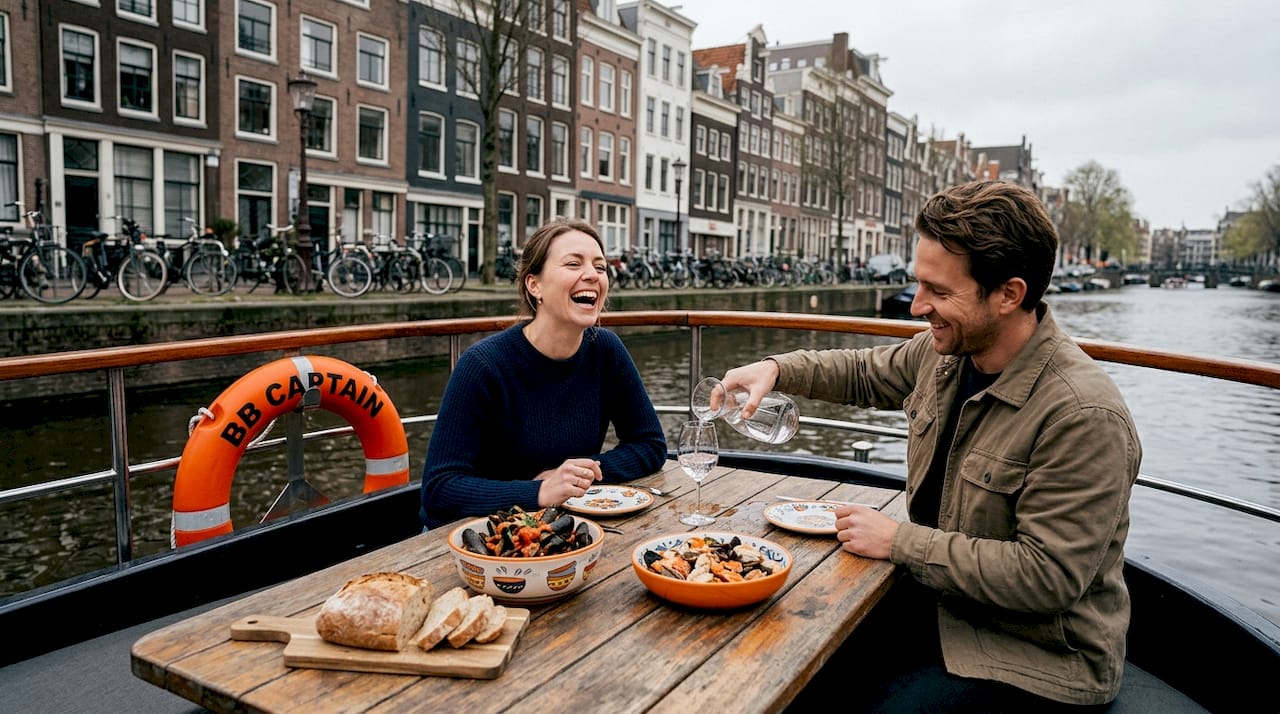
Why electric boats are reshaping Amsterdam’s canal dining
Picture this: your group is finally seated on a canal boat in Amsterdam, ready for a relaxing evening of food and laughter. But then the engine rumbles to life, exhaust drifts past your plates, and you’re shouting over the noise just to pass the salt. That’s the traditional canal boat experience many visitors didn’t expect. Today, Amsterdam’s waterways are going through a quiet revolution, and over 500 electric passenger boats are already gliding through the canals, making group dining and celebrations genuinely enjoyable in ways that weren’t possible before.
Table of Contents
The changing rules: Why Amsterdam’s canals are going electric
How electric boats elevate group dining and celebration on Amsterdam’s canals
Electric vs. traditional boats: A side-by-side comparison
Everything guests need to know before booking an electric boat
Our perspective: Why electric boats deliver more than just clean canals
Ready to plan your electric boat celebration?
Frequently asked questions
Key Takeaways
Point | Details |
|---|---|
New canal regulations | Amsterdam now requires emission-free boats in city center canals, driving widespread adoption of electric vessels. |
Superior group experience | Electric boats provide cleaner, quieter, and more comfortable atmospheres perfect for group dining and celebrations. |
Convenience and access | A growing network of charging stations and modern boats makes planning an electric boat outing easy. |
Expert tips | Book early and communicate with providers to secure the best routes and boat layouts for your group. |
Memorable celebrations | Electric boats transform canal outings into unique, intimate, and sustainable group events. |
The changing rules: Why Amsterdam’s canals are going electric
Amsterdam isn’t just encouraging cleaner boats as a suggestion. It’s written into law. Starting April 1, 2025, the city enforced a strict emission-free zone covering all central canals within the Singelgracht ring. That means pleasure boats must run on fully electric power, hydrogen, or muscle power. Combustion engines are banned outright, with a brief transition period for existing vignette holders running through 2026 to 2028. After that window closes, there’s no exception.
For families and groups planning a celebration on the water, this shift is actually great news. The canals are measurably quieter, cleaner, and far more pleasant to spend time on. You won’t have to compete with diesel fumes or engine noise when you’re trying to have a real conversation over dinner.
Here’s what the change means in practical terms for your group outing:
No combustion engines allowed in central Amsterdam canals from 2025 onward
Electric and hydrogen boats are now the standard for all commercial and private rentals
Existing boat owners had a grace period, but that transition is closing fast
New rentals and tours are already fully electric across the city
Noise levels on the canals have dropped significantly, creating a noticeably calmer atmosphere
Want to know what a modern electric boat actually looks like for a group? The boat’s features give you a clear picture of what to expect before you book. The shift to electric isn’t just a regulatory checkbox. It fundamentally changes the mood of your outing, and groups who’ve experienced both versions almost universally prefer the electric option.
How electric boats elevate group dining and celebration on Amsterdam’s canals
Understanding the rules is one thing, but what does this mean for your group dining or celebration in practice? Here’s how electric boats transform the experience in ways that really matter when you’re with family or a group of close friends.
The most immediate difference is the silence. Traditional combustion boats generate constant engine noise that drowns out conversation, forces people to lean in close, and creates a background stress you almost stop noticing until it’s gone. Electric motors are near-silent. The noise drop transforms the experience in a way that’s hard to overstate. Conversations flow naturally. Kids can speak at a normal volume. Grandparents don’t have to cup their ears. The canal becomes the soundtrack instead of the engine.
The second difference is physical comfort. Reviews consistently praise electric boats for better hygiene, smoother acceleration, less vibration, and zero fumes drifting over the food. When you’re sharing a meal, that matters enormously. Nobody wants barbecue smoke competing with exhaust. Nobody wants their kids sitting next to a hot diesel engine casing. Electric motors run cool, clean, and quietly in the background while your group focuses on the fun.
Here’s a quick look at how the dining experience improves on electric water:
Experience factor | Traditional boat | Electric boat |
|---|---|---|
Conversation quality | Difficult, must shout | Easy, natural flow |
Air quality near food | Fumes occasional | Completely clean |
Vibration at the table | Noticeable, constant | Minimal to none |
Comfort for kids/seniors | Mixed | High |
Ambiance during sunset | Engine sound prominent | Canal sounds only |
Modern electric boats are also designed with group layouts in mind. Wide decks, built-in tables, group seating configurations, and celebration-friendly setups like integrated grills make these boats feel more like a floating dining room than a transport vessel. The layout is designed around the experience rather than purely around moving people from point A to point B.
To understand exactly how it works from booking through to your day on the water, the process is simpler than most groups expect.
Pro Tip: Book your electric boat at least two to three weeks in advance for weekend dates and public holidays. These slots fill up fast during summer and during popular Dutch celebration periods like King’s Day. A last-minute search on a Friday afternoon in July will likely leave you without options.
Electric vs. traditional boats: A side-by-side comparison
To make your decision easier, let’s break down how electric boats stand apart from traditional options in ways that matter for your group.
Amsterdam’s 500-plus electric passenger boats represent the largest electric canal fleet in the world, and the city plans to expand charging infrastructure from just 22 stations to a remarkable 2,500 charging points by 2030. This infrastructure commitment means electric boats aren’t a novelty. They’re the backbone of Amsterdam’s canal activity now and for decades ahead.
“Switching from a traditional canal tour to an electric boat felt like going from a busy highway to a quiet country road. We actually heard each other speak for the first time.” — Group visitor feedback compiled from canal tourism reviews
Here’s a direct comparison to help your group visualize the difference:
Feature | Electric boat | Traditional combustion boat |
|---|---|---|
Engine noise | Near silent | Constant rumble |
Exhaust and fumes | None | Present, especially idling |
Vibration | Smooth | Noticeable during acceleration |
Environmental impact | Zero emissions | Contributes to canal pollution |
Suitable for families with kids | Excellent | Moderate |
Canal access in 2026 | All Amsterdam canals | Restricted or banned (central) |
Atmosphere for celebration | Relaxed, social | Functional but distracting |
What should you expect when you step onto a well-equipped electric boat for a group outing? Here’s a numbered checklist of what a quality experience looks like:
Quiet departure from the dock with smooth, gentle acceleration
Clean, open deck with no exhaust smell or engine heat nearby
Group-friendly seating arranged around a central table or cooking area
Integrated grill or BBQ options for outdoor cooking while cruising
Easy-to-operate controls so nobody needs a boating license
Child-safe features including railings, low deck height, and stable handling
Scenic route options through calm, beautiful waterways
Charging infrastructure at most dock stops, removing range anxiety
Flexible timing so your group can linger at a scenic spot without rush
Exploring the boat details ahead of time gives your group a realistic sense of space, layout, and features so there are no surprises on the day.
Everything guests need to know before booking an electric boat
Once you know what makes electric boats stand out from traditional options, here’s a practical checklist for a flawless group outing.
Electric boating is genuinely easy for first-timers, but a little preparation makes the difference between a good day and a great one. With charging infrastructure expanding rapidly and no license requirements for most recreational electric boats, the main job is simply showing up ready to enjoy the experience.
Before you arrive:
Confirm your group size and communicate any dietary preferences or celebration needs to the rental provider
Check the weather forecast and pack a light layer. Water temperatures make the canal breezy even on warm days
Confirm whether food and drink packages are included or whether you should bring your own
Make sure at least one person in the group reads the brief operational guide for the boat controls
Book through the online platform in advance and confirm the start location, parking, and boarding process
On the day:
Arrive 10 to 15 minutes before your slot to handle boarding, a brief safety orientation, and setup
Bring sunscreen for midday summer cruises. The reflection off the water intensifies sun exposure significantly
Dress in layers, especially for spring and fall outings when canal temperatures vary
Let the provider know if your group includes young children, elderly guests, or anyone with mobility needs so they can prepare the boarding area appropriately
What about the kids and seniors in your group? Electric boats are genuinely among the most accessible water experiences available. The absence of diesel fumes is particularly important for elderly guests and young children. Smooth acceleration means no sudden lurching that could unsettle anyone on deck. Many modern electric rental boats include low-profile steps, stable platforms, and fixed railings throughout.
Pro Tip: Morning slots on weekdays offer the calmest canals with the least boat traffic. If your group wants a peaceful, unhurried experience rather than peak-hour activity on the water, a Tuesday or Wednesday morning booking gives you an almost private canal experience that weekend cruisers rarely see.
When should you choose an electric boat over other dining venues? If your group has more than four people and wants a shared experience that isn’t just sitting at a restaurant table, the canal setting wins every time. The combination of movement, scenery, outdoor cooking, and privacy from other diners creates a social atmosphere that no fixed venue can replicate.
Our perspective: Why electric boats deliver more than just clean canals
With all the practical facts covered, here’s a candid take on what makes electric boats the natural choice for group celebrations on Amsterdam’s canals.
Most people come to us thinking the electric boat experience is just a cleaner, quieter version of a traditional canal tour. That’s accurate, but it misses the bigger point. The real transformation is emotional. When the engine noise disappears, something shifts in how people relate to each other on the water. Conversations stop being logistical, “What do you want to eat?” “Can you pass that?” and start being real. We’ve seen groups who barely spoke during a noisy boat tour turn into genuinely connected gatherings on an electric boat.
Traditional canal celebrations had their charm, but honestly, they were often loud, slightly chaotic, and designed more around the experience of “being on a boat” than around the people on it. Electric boats flip that. The boat becomes the backdrop rather than the main event.
There’s also an inclusivity angle that gets overlooked. When you remove fumes, loud engines, and vibration, you automatically make the experience better for guests who might otherwise struggle. Children who get motion sick tolerate smooth electric acceleration far better. Elderly guests who find loud engines overwhelming are genuinely comfortable. People with sensory sensitivities can actually relax.
Our strong view is that group-focused boat features designed for families and social gatherings represent the best version of the Amsterdam canal experience. It’s not a compromise to go electric. It’s an upgrade in every dimension that matters for celebration.
Ready to plan your electric boat celebration?
If you’re ready to take your group gathering to Amsterdam’s waterways, BBQ Captain makes the experience beautifully simple. From the moment you browse the available options to the moment you push off from the dock, everything is built around making your group feel at home on the water.
The BBQ Captain boat rental service combines outdoor cooking with relaxed canal cruising in the scenic Amsterdamse Bos, just outside Amsterdam’s center. Whether you’re celebrating a birthday, reunion, or just a long-overdue catch-up with friends, the experience is designed around your group. Check out the full range of electric boat amenities to see what’s included, and walk through the straightforward group booking guide to lock in your date. Packages cover groups of various sizes, and seasonal discounts make it easier to plan something memorable without stretching the budget.
Frequently asked questions
Are electric boats allowed on all Amsterdam canals in 2026?
Yes, electric boats are permitted throughout central Amsterdam canals and fully meet the city’s emission-free zone requirements enforced since April 2025. Combustion-engine boats are now restricted from these areas.
Do electric boats have enough charging stations for long group trips?
By 2030, Amsterdam will expand to 2,500 charging points, making longer group cruises increasingly convenient. Current infrastructure already supports the majority of recreational canal routes without interruption.
What makes electric boats better for group celebrations?
Electric boats are quieter, cleaner, and deliver smoother rides, which creates a social atmosphere ideal for families and friends who want real conversation and comfort during their outing.
Are electric boats more expensive to rent than traditional ones?
Pricing is comparable since most central Amsterdam canal rentals have already transitioned to electric boats, making it the standard rather than a premium option.
Will bad weather affect my electric boat cruise?
Electric boats operate in most weather conditions, but you should always confirm with your provider about covered seating areas or their policy for rescheduling during heavy rain or storms.